Cleanup Program

jump over navigation barHome

Current Activities

Today's Mission

History of RVAAP

Cleanup Program

Areas of Potential Contamination

RVAAP Documents

Engineered Burns Documents

Related Links

Public Participation

Schedule of Events

Search Documents

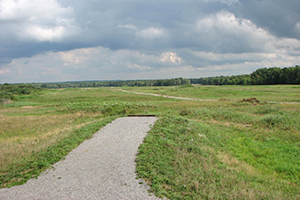
Photo of Present-day Area.Site Description

The Ravenna Army Ammunition Plant (RVAAP) originally covered 21,419 acres in Portage and Trumbull counties, Ohio. Today, the Ohio National Guard uses most of the site as a training ground. The remaining 1,481-acre property has known, or suspected, contamination.

The degree to which contaminated areas need to be cleaned up is determined by the findings of risk assessments. Scientists evaluate data collected from these areas. Data include analysis of various media, including soil, sediment, surface water, and groundwater. The information is used to determine if there are factors that could increase the likelihood of risk to human health or to vegetation and wildlife.

Cleanup standards will be based on future land use considerations. Contaminated areas will be transferred to the National Guard only after the Army has cleaned them to an acceptable degree.

The Installation Restoration Program directs the cleanup program at RVAAP. This program follows requirements determined by legislation called Comprehensive Environmental Response, Compensation, and Liability Act (CERCLA or SuperFund).

RVAAP is not on the U.S. Environmental Protection Agency’s National Priorities List (NPL). The NPL is a U.S. Environmental Protection Agency list of hazardous waste sites that are priorities for cleanup. RVAAP, however, is included in the EPA’s Comprehensive Environmental Response, Compensation, and Liability Information System (CERCLIS) database. CERCLIS contains information on hazardous waste sites, potential hazardous waste sites, and remedial activities across the nation.

RVAAP is one of the facilities identified by Secretary of Defense Cohen, as a candidate for early environmental cleanup and property divestiture by the Army. Before this action can occur, the Army must determine what and where the contaminants are, how contaminated the property is, what the risk is to the general public, and how to remediate the residual contamination safely and efficiently.

For more information on the laws and regulations behind the cleanup at RVAAP, use these links:
CERCLA follows a defined process for cleaning up hazardous waste sites. For information about the process, click here: http://www.epa.gov/superfund/action/process/sfproces.htm

Some areas of potential contamination at RVAAP do not fall under the IRP or CERCLA programs. These are generally areas where wastes were actively being treated or stored when the IRP began. These areas fall under EPA’s National Pollutant Discharge Elimination System (NPDES) or the Resource Conservation and Recovery Act (RCRA).

The Office of Solid Waste regulates all hazardous waste under the Resource Conservation and Recovery Act (RCRA). To learn more about this Act, click here: http://www.epa.gov/epaoswer/osw/mission.htm

The NPDES was authorized under the Clean Water Act. To learn more about these regulations click here: http://cfpub.epa.gov/npdes/

The cleanup program at RVAAP is applied to specific areas that have been delineated based on the activities that have occurred at the site. Click to learn about the areas of potential contamination at RVAAP. The table below shows the cleanup status of these specific areas. According to the current plan, all cleanup activities are scheduled for completion by the year 2013, and all long-term monitoring should be completed by 2017.

Icon for Cleanup Gallery Photo Album RVAAP Cleanup Progress Photo Album

The following table provides summary information about each area of potential contamination. Click on the name of the area found in the second column to link to a description of the area from the Installation Action Plan in PDF format.

Area

Area of Potential Contamination Status
Historical Use
Acres
1.
Ramsdell Quarry Landfill Under study Landfill 10
2.
Erie Burning Grounds Under study Burn explosives 35
3.
Open Demolition Area #1 Some unexploded ordance (UXO) removed; No Further Action (2003) Detonate explosives 6
4.
Open Demolition Area #2 Some unexploded ordance (UXO) removed; additional study needed Detonate explosives 25
5.
Winklepeck Burning Grounds Soil and UXO removal planned Burn explosives 200
6.
C Block Quarry Additional study needed Dispose waste 0.3
7.
Bldg 1601 Hazardous Waste Storage Not under IRP    
8.
Load Line 1 Under study Load explosives 160
9.
Load Line 2 Under study Load explosives 212
10.
Load Line 3 Under study Load explosives 174
11.
Load Line 4 Under study Load explosives 129
12.
Load Line 12 Under study Load explosives 75
13.
Building 1200 Under study Demilitarize explosives  
14.
Load Line 6 Evaporation Unit Not under IRP    
15.
Load Line 6 Treatment Plant Not under IRP    
16.
Fuze & Booster Quarry Landfill/Pond Under study Burning/landfill 45
17.
Deactivation Furnace Not under IRP    
18.
Load Line 12 Pink Waste Water Treatment Not under IRP    
19.
Landfill North of Winklepeck Burning Grounds Additional study needed Landfill 10
20.
Sand Creek Sewage Treatment Plant Not under IRP    
21.
Depot Sewage Treatment Plant Not under IRP    
22.
George Road Sewage Treatment Plant Not under IRP    
23.
Unit Training Equipment Site Not under IRP    
24.
Waste Oil Tank Not under IRP    
25.
Building 1034 Motor Pool Not under IRP   4
26.
Fuze Booster Area Settling Tanks Not under IRP    
27.
Building 854-PCB Storage Not under IRP    
28.
Mustard Agent Burial Site Additional study needed Buried waste 0.006
29.
Upper and Lower Cobbs Ponds Under study Received load line waste water 9
30.
LL7 Pink Waste Water Treatment Not under IRP    
31.
Ore Pile Retention Pond Not under IRP    
32.
40 MM Firing Range Under study Firing range 2
33.
Load Line 6 Fuze and Booster Under study Munitions testing 45
34.
Sand Creek Disposal Road Landfill Additional study needed Landfill 2.7
35.
Bld 1037 - Laundry Waste Water Sump Not under IRP   .2
36.
Pistol Range Additional study needed Firing range 1.2
37.
Pesticide Buildings S-4452 Not under IRP    
38.
NACA Test Area Additional study needed Crash-test aircraft 12.4
39.
Load Line 5 Additional study needed Fuze production 39
40.
Load Line 7 Additional study needed Load explosives 37
41.
Load Line 8 Additional study needed Load explosives 44
42.
Load Line 9 Under study Produced detonators 106
43.
Load Line 10 Additional study needed Produced primers and percussion elements 36
44.
Load Line 11 Under study Produced primers and fuzes 47
45.
Wet Storage Area Additional study needed Material storage 36
46.
Building F-15 and F-16 Additional study needed Munitions testing 2
47.
Building T-5301 No further action (2000) Equipment decontamination  
48.
Anchor Test Area Additional study needed Test explosive-driven anchors 2
49.
Central Burn Pits Under study Burning non-explosive material 20
50.
Atlas Scrap Yard Additional study needed Construction camp and scrap yard 150
51.
Dump Along Paris Windham Rd. Additional study needed Dump site 0.2